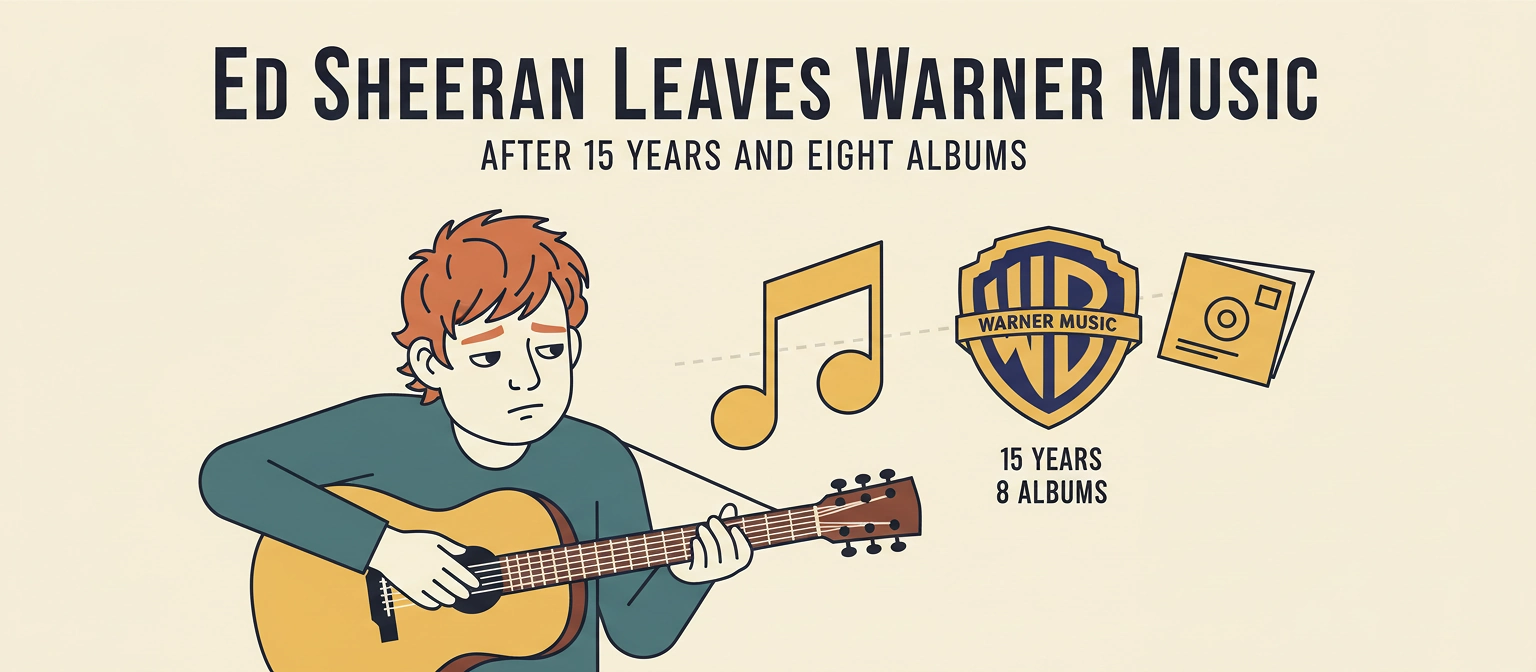
Ed Sheeran has parted ways with Warner Music Group after 15 years and eight full-length albums, ending one of the most commercially successful major-label partnerships of the streaming era. The singer announced the split in a letter emailed to fans on Friday, May 22, and later confirmed to U.K. publication Music Week, as multiple outlets including Billboard and Variety reported. Sheeran took care to frame the move as an amicable separation rather than a breakup, writing that he leaves “with so much love & gratitude.”
Industry watchers have been watching for signs of change in Sheeran’s business strategy as he enters the next phase of a global stadium run that includes SoFi Stadium in Inglewood on August 8, 2026, and Petco Park in San Diego on July 21, 2026. According to Billboard, Sheeran’s note emphasized that “this isn’t a ‘disgruntled artist leaves record label’ type situation,” pointing instead toward a new chapter that he suggested will be “independent in every way.” Warner Music Group issued its own statement confirming the departure and praising the collaboration, Variety reported.
Why the Label Shift Matters
The move is notable because Sheeran’s Warner catalog includes some of the highest-selling albums of the last decade, making the label relationship central to his global reach and radio footprint. Spin observed that the 15-year run coincided with Sheeran becoming “one of the most commercially dominant artists of the modern era,” with multiplatinum records and record-setting streaming numbers that reshaped how pop acts approach touring and releases. In practical terms, fans shouldn’t expect immediate changes to existing music or upcoming shows, but future projects and catalog strategy may now be handled independently or through a new partner.
Editorially, the departure fits into a broader pattern of superstar artists reassessing their label relationships as they accumulate leverage and catalog value. For Sheeran, who has already experimented with self-release strategies and direct-to-fan communication, going independent could mean greater control over licensing, sync placements, and how his music is rolled out across platforms. That flexibility is increasingly attractive to top-tier acts who no longer need the traditional machine to reach audiences at scale.
What This Means for SoCal Fans
For Southern California, the news lands as Sheeran prepares to return to stadium stages in Los Angeles and San Diego later this year. As of now, no changes to those dates have been announced, and tickets remain valid through primary outlets. Sheeran’s shows at SoFi Stadium and Petco Park are poised to test how his live draw holds up after multiple previous cycles through the region, including prior runs at the Rose Bowl and other large-scale venues.
At the same time, BTS is set to bring its own stadium run to SoFi Stadium on September 1, 2, and 5, 2026, underscoring how global pop titans are leaning on Southern California as a key hub for multi-night engagements. That convergence means local fans will get a close look at how different superstar models—from Sheeran’s increasingly independent path to BTS’s meticulously coordinated label campaigns—play out on the ground, in the same venue footprint.
What Happens Next
The next immediate steps will be closely watched by both industry insiders and fans. Sheeran did not announce a new label partner, but his letter hinted at “independent in every way,” suggesting a self-owned or self-administered structure for future releases and catalog rights. While Warner Music will retain rights to his existing recordings under the original deal terms, any new music or reimagined catalog projects could follow a different blueprint.
In the near term, Sheeran’s focus appears to be on the live show: the global tour dates, including the Southern California stops, are proceeding as planned. Longer term, the label shift will likely influence how his next album cycle is marketed, how deep catalog is curated and monetized, and whether he follows other artists in taking a more hands-on role in licensing and creative partnerships. For now, the message to fans is clear: the music stays, and the road show continues, but the business behind the songs is entering a new era.
Last updated May 27, 2026.
Sources: Billboard, Variety Music, Spin
ref: 6964